Will your battery keep the lights on in a summer power cut?
Backup needs the right set-up. What gets power in a cut, and what to ask your installer.
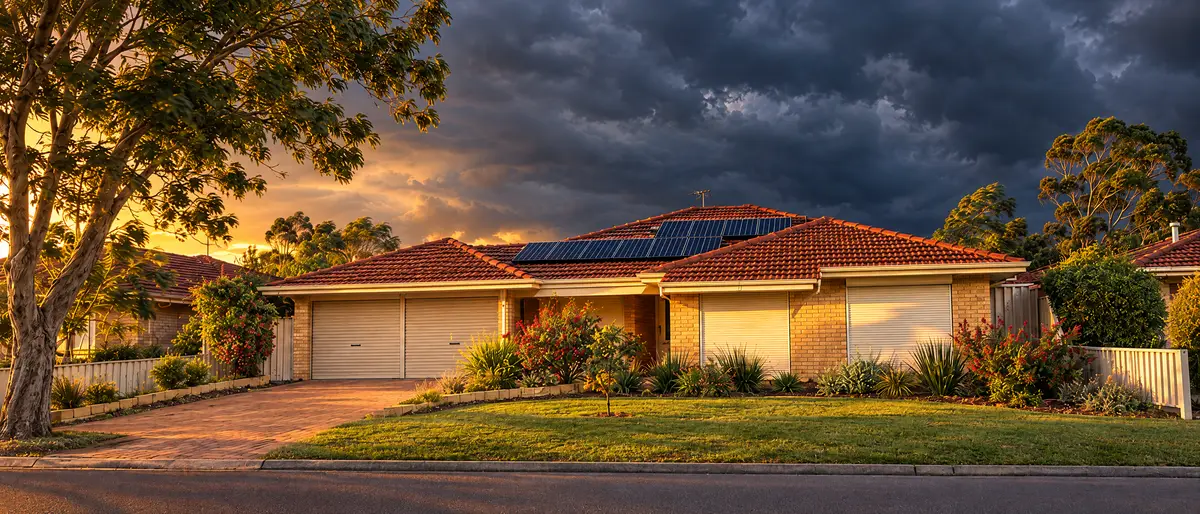
The same street in a power cut
- No batteryLights out
- Battery set up for backupLights stay on
- Battery not set up for backupLights out
What this means for you
Having a battery is not the same as having backup. Ask your installer whether yours is set up for it, before the next storm.
It is easy to assume a home battery keeps the house running when the grid goes down. Backup needs the right set-up, and not every system can do it. Summer storms and heat make this worth checking before you need it.
In short
A battery can keep power on in an outage only if it is set up to, and not every system can. Backup may cover the whole house, a few circuits or one phase, and charge held back for an outage is charge you can't use in the evening peak. Ask your installer how yours behaves before you need it.
A battery doesn't always provide backup
The government's solar guide says a battery can provide backup power during an outage, but only if it is set up to. It also says not all battery systems can. Solar panels on their own usually shut off in a blackout, for safety, so the sun alone usually won't run your house.
Two common set-ups
- The battery runs your appliances. The solar shuts down and the battery supplies power until it runs flat. After that there is no power until the grid is back.
- The system separates from the grid and carries on. This is called an islandable system. When it is sunny the solar also charges the battery. The government says it costs more, and it may last several days if you go easy on power.
What this means for you
The first kind runs until the battery is flat. The second kind keeps charging from the sun, so it can last longer if you go easy on power.
What gets power
Depending on the battery and set-up, backup may cover the whole property, only selected circuits such as lights, the fridge or a water pump, or only one phase if your home has three-phase supply. In an outage you may need to ration what you run, because the battery can only supply so much at once and too much load can overload it.
Backup and bill savings pull in different directions
The government says a battery can be set up to provide backup, to give the best bill savings, or to take part in a virtual power plant (VPP). Holding charge back for an outage means less is left to use at peak prices in the evening. This is a choice about your home, and your installer or retailer can talk it through.
If you join a virtual power plant, the Clean Energy Regulator says your battery can help the grid by releasing stored energy during high-demand periods. Joining is your choice. It also says to understand how battery discharge rates affect your warranty. Before you agree, ask the operator when it can draw on your battery, and whether you can keep some charge back for yourself.
Questions to ask your installer
- Does my battery provide backup in a blackout, or only help with bills?
- Does backup cover the whole house, certain circuits, or one phase?
- How long should it last if the fridge, lights and a fan are running?
- Is any charge held back for backup now, and who can change that?
- Does it need an internet connection to work properly?
Write down the answers and ask your installer to show you how your system behaves in an outage, so you are not finding out during a storm.
Where PowerLens fits
- Step 1
Upload your bill
We read what you pay now, exactly, from your own bill.
- Step 2
We price every plan in your area
Every plan in the government's open plan data, priced on your use.
- Step 3
Stay or Switch
If staying put is the better plan, that is what the report says.
PowerLens compares electricity plans. It doesn't set your battery or tell you how much charge to hold back. Settings for that come from your installer and your battery maker's app. If your battery is set up around an old plan, the plan check is still worth doing. Start with a recent bill, or add your meter data file (NEM12) for a half-hourly check. It's free. Here is where to get it.
Next: why summer evenings cost the most.
Where to check the details
Read next
Check your own plan
Upload your bill and we price every plan in your area against it.
- The check is free. You only pay if we find you a better plan.
- Retailers never pay us.
- Your bill file is deleted once we've read it.